

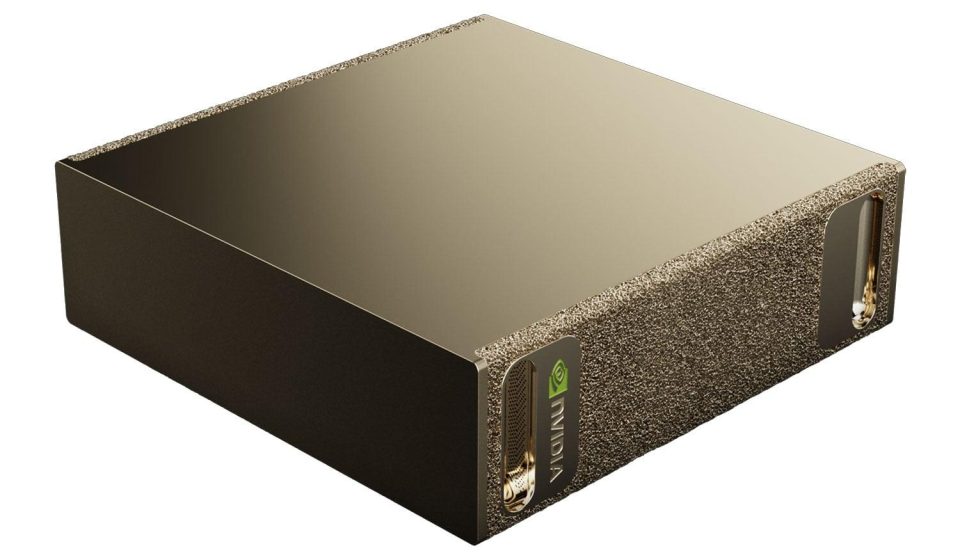

AI creator Nick Saraev says Amazon closed his account after he attempted to purchase seven NVIDIA DGX Spark AI computers across four orders. The incident has attracted attention across the technology community, particularly after Epic Games CEO Tim Sweeney described a separate experience involving canceled NVIDIA GPU purchases.
The story raises questions about how major online retailers handle expensive computing equipment, account verification, order cancellations, and purchases intended for artificial intelligence development.
However, one distinction is essential: Amazon has not publicly established why Saraev’s account was closed. Claims that the company automatically bans people who purchase AI hardware, maintains a special watchlist, or has introduced a general prohibition on GPU purchases remain unverified.
For developers, businesses, and researchers investing in local AI computing, the controversy offers an opportunity to examine both the reported events and the practical challenges of purchasing high-value hardware.
What Happened to Nick Saraev’s Amazon Account?
According to reporting by Tom’s Hardware on November 3, 2026, Nick Saraev publicly described a series of unsuccessful Amazon orders involving NVIDIA DGX Spark systems.
Saraev indicated that he had attempted four orders totaling seven computers. Screenshots discussed in the reporting showed canceled orders involving configurations with 128GB of unified memory and 4TB of storage.
After the cancellations, Saraev shared an account-closure notice that reportedly referenced previous attempts to verify his account. He said he had completed verification, but the closure notice did not provide a detailed public explanation for the final decision.
That distinction is important. The reported closure and cancellations are supported by Saraev’s statements and screenshots described by journalists. The underlying reason for Amazon’s decision has not been independently established.
Readers can review the original reporting at Tom’s Hardware.
Who Is Nick Saraev?
Nick Saraev is an AI-focused creator and entrepreneur known for discussing artificial intelligence, automation, and business applications of emerging technology.
His public work has helped attract attention to practical AI tools and systems that individuals and organizations can operate or customize.
The reported Amazon incident gained traction partly because the attempted purchases involved specialized AI hardware rather than ordinary consumer electronics.
Seven DGX Spark computers represent a substantial hardware investment. A purchase of that size can be relevant to development teams, consultants, research groups, or organizations testing local AI infrastructure.
However, the number of computers ordered does not by itself establish improper conduct. Nor does it establish that Amazon was required to complete the orders. Understanding the retailer’s actual explanation would be necessary before drawing conclusions about its decision.
What Is NVIDIA DGX Spark?
NVIDIA DGX Spark is a compact desktop AI computing platform powered by the NVIDIA GB10 Grace Blackwell Superchip.
Unlike a typical mini-PC intended primarily for office productivity, DGX Spark is designed for AI development, model experimentation, inference, and selected fine-tuning workloads.
The 128GB configuration uses coherent unified system memory, allowing its CPU and GPU architecture to access a shared memory pool. This can be particularly useful when working with AI models whose memory requirements exceed the capacity of many conventional consumer graphics cards.
According to NVIDIA’s official hardware documentation, DGX Spark’s capabilities include:
- A 20-core Arm CPU integrated with NVIDIA Blackwell graphics architecture.
- Up to 128GB of unified system memory in the documented high-memory configuration.
- Memory bandwidth of 273GB/s.
- NVMe storage configurations.
- 10 Gigabit Ethernet and advanced high-speed networking.
- NVIDIA’s software ecosystem for AI development.
- A compact form factor designed for desktop deployment.
NVIDIA describes the platform as suitable for prototyping and working with large AI models locally. Actual model compatibility depends on precision, quantization, memory overhead, framework support, and the specific workload.
Why Would Someone Purchase Multiple DGX Spark Computers?
There are legitimate technical reasons to purchase several AI computers.
A development organization might need separate systems for testing, evaluation, customer demonstrations, and production-like experimentation. Multiple devices can also support parallel workloads, team access, or experiments involving distributed computing.
For example, an AI consulting business could use one machine to evaluate a language model, another to test document retrieval, and additional systems for isolated customer environments.
A research group might compare model configurations across multiple devices without repeatedly rebuilding the same environment.
Some DGX Spark deployments can also take advantage of advanced networking capabilities for multi-system configurations, subject to software and hardware requirements.
These examples illustrate possible legitimate use cases. They do not establish Saraev’s precise intended deployment or explain Amazon’s response.
Tim Sweeney Reports a Separate NVIDIA GPU Ordering Problem
The controversy expanded when Tim Sweeney, CEO of Epic Games, described difficulties with NVIDIA GPU purchases through Amazon.
According to the same reporting, Sweeney said his Amazon account remained open and ordinary orders continued to be accepted. However, after attempting to buy two NVIDIA GPUs, he experienced repeated cancellations before the expected delivery dates.
His experience significantly differs from Saraev’s: Sweeney did not report that Amazon closed his account.
The two accounts therefore should not be combined into a single claim that Amazon is routinely terminating the accounts of GPU purchasers.
They do, however, raise a broader question: what should buyers expect when ordering high-value computing equipment through large online marketplaces?
Has Amazon Explained Why the Orders Were Canceled?
As of this article’s November 4 update, the publicly available reporting does not establish a specific official explanation for Saraev’s account closure or Sweeney’s reported cancellations.
Amazon’s general conditions of use give the company discretion over certain orders and account relationships. That does not reveal which particular factors were considered in either incident.
Several possible explanations have been discussed online, including:
- Automated payment or identity-verification systems.
- Fraud-prevention reviews associated with unusually expensive purchases.
- Marketplace seller or fulfillment restrictions.
- Inventory or order-processing problems.
- Resale or export-compliance concerns.
These are possibilities, not confirmed findings about either buyer.
Without a detailed statement from Amazon, it would be misleading to identify one of these explanations as the actual cause.
Why Is AI Hardware Receiving So Much Attention?
Interest in local AI infrastructure has increased as developers seek more control over model deployment, privacy, latency, experimentation, and ongoing operating costs.
Cloud AI services remain valuable, particularly when workloads need substantial scale or occasional bursts of processing power. But local systems offer a different operating model.
A company running AI models on its own hardware may have greater control over where certain data is processed. Developers can also experiment without sending every request to an external hosted model.
Local computing does not automatically guarantee privacy or security. Organizations must still implement appropriate access controls, software updates, logging, and data-handling policies.
Nevertheless, powerful compact systems such as DGX Spark make local AI development more accessible to teams that previously depended on larger servers or cloud infrastructure.
Why Do GPU Memory and Unified Memory Matter?
Large language models require memory to store their parameters and working data during inference.
A conventional discrete GPU has a dedicated memory pool. When a model exceeds available GPU memory, some workloads may need to offload data to system RAM, distribute the model across multiple accelerators, or use lower-precision representations.
Unified-memory architectures approach the problem differently by making a larger shared memory pool available to the computing system.
However, memory capacity is only part of the performance equation. Bandwidth, compute throughput, software support, and model architecture also influence speed.
A machine capable of loading a larger model is not necessarily faster than every smaller-memory workstation running a more compact model.
Does This Mean Amazon Is Banning AI Computers?
No such broad conclusion is supported by the available evidence.
The reporting concerns specific customer experiences. It does not establish a company-wide policy prohibiting AI computers or NVIDIA GPU purchases.
Indeed, the products involved were still being advertised for sale in the marketplace during the reporting period.
It is reasonable to ask questions about order transparency and customer support. It is not reasonable to transform a small number of reported incidents into an established universal rule.
What Should Businesses Learn From This Incident?
The most useful lesson for organizations is that procuring expensive computing equipment requires planning beyond selecting a product and entering payment details.
Businesses should consider supplier reliability, documented order terms, expected fulfillment times, warranty support, and the consequences of a canceled purchase.
For time-sensitive projects, it can be useful to maintain more than one qualified sourcing option.
Organizations may also benefit from purchasing processes that support formal quotations, purchase orders, invoices, and communication with a sales representative.
These arrangements do not guarantee fulfillment, but they can provide clearer documentation and escalation paths than an entirely self-service purchasing experience.
How to Reduce Procurement Disruption
Before ordering expensive AI hardware, prepare a short technical and purchasing checklist.
- Confirm the exact manufacturer model and configuration.
- Check whether the seller is authorized or otherwise reputable.
- Verify that the quoted price includes the intended warranty and support.
- Ensure payment and business-account details are accurate.
- Confirm the delivery destination and any applicable purchasing restrictions.
- Retain quotations, order confirmations, and correspondence.
- Plan for delays or cancellations when hardware is essential to a project deadline.
For organizations purchasing regulated or export-controlled products, applicable legal and compliance requirements should be reviewed before the transaction.
None of these measures can prevent every cancellation, but they can make unexpected problems easier to address.
What Does This Mean for the Future of Local AI?
The incident highlights a tension between growing demand for powerful AI hardware and the practical complexity of purchasing specialized equipment.
As local inference, autonomous agents, and private AI deployments become more common, organizations will need clearer information about system capabilities, procurement requirements, and support.
AI hardware is no longer relevant only to large research laboratories. Small businesses, independent developers, educational institutions, and technical consultants increasingly have reasons to evaluate it.
That broader audience benefits from accurate specifications, transparent purchasing information, and dependable after-sales support.
Where Can Buyers Research AI Hardware?
Organizations evaluating AI computers should begin with their actual workload rather than a product’s popularity.
Important questions include model size, memory requirements, expected concurrent users, operating system compatibility, power consumption, and whether the system must operate on-premises entirely.
AztekComputers provides technology products and business purchasing resources, including information about AI and accelerated computing.
Buyers should verify specific product listings, availability, and any applicable restrictions before placing an order. This article does not claim that AztekComputers currently stocks the exact DGX Spark configuration involved in the reported incident.
Frequently Asked Questions
Did Amazon close Nick Saraev’s account?
Nick Saraev publicly reported that Amazon closed his account after several canceled NVIDIA DGX Spark orders. The closure was described in technology-news reporting published in early November 2026.
How many NVIDIA DGX Spark computers did he attempt to purchase?
Reporting based on his shared order screenshots indicates four orders totaling seven DGX Spark systems.
Why did Amazon close his account?
The specific reason has not been publicly established. The reported closure notice referred to account verification but did not provide a detailed explanation.
Did Amazon close Tim Sweeney’s account?
No. Sweeney described canceled NVIDIA GPU orders but said his Amazon account remained active.
Is Amazon banning NVIDIA GPU purchases?
The available reports do not establish a general ban on NVIDIA GPU or AI computer purchases.
What is NVIDIA DGX Spark used for?
DGX Spark is designed for local AI development, inference, model experimentation, and selected fine-tuning workloads.
Can businesses buy multiple AI computers?
Businesses may have legitimate reasons to purchase multiple systems, although transactions remain subject to seller terms, availability, and applicable legal requirements.
Final Thoughts
The reported closure of Nick Saraev’s Amazon account has become a notable story because it combines AI hardware demand, high-value purchasing, and questions about marketplace transparency.
Yet the most important facts remain limited: Saraev reported canceled DGX Spark orders and an account closure; Tim Sweeney separately described GPU order cancellations; and Amazon’s specific reasons have not been established publicly.
For AI developers and business buyers, the practical takeaway is to research hardware carefully, document major purchases, and plan procurement with potential fulfillment disruptions in mind.
Explore more practical technology guidance at the AztekComputers Blog.