

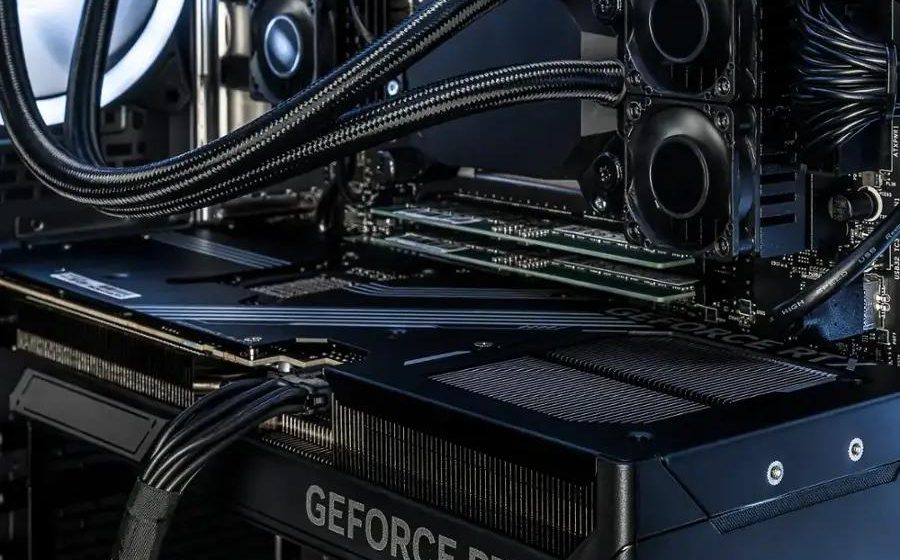

Purchasing a high-performance NVIDIA graphics card or specialized AI computer can involve a substantial financial commitment. For AI developers, research teams, and businesses, these components may be essential to planned projects rather than optional consumer upgrades.
In November 2026, reports involving canceled Amazon orders for NVIDIA GPUs and DGX Spark computers attracted attention across the technology industry.
AI creator Nick Saraev said Amazon canceled several orders and subsequently closed his account. Epic Games CEO Tim Sweeney separately described NVIDIA GPU orders that were repeatedly canceled before delivery.
These incidents raise an understandable question: why might an expensive GPU order be canceled, and what can buyers do when it happens?
There is no verified single explanation for the specific incidents. However, understanding how high-value hardware transactions work can help buyers reduce avoidable problems and respond more effectively to unexpected cancellations.
What Happened With the Recent Amazon GPU Orders?
According to November 2026 reporting by Tom’s Hardware, Nick Saraev attempted to purchase seven NVIDIA DGX Spark AI systems across four orders.
The orders were reportedly canceled, and Saraev subsequently shared a notice indicating that Amazon had closed his account.
Separately, Tim Sweeney reported that Amazon continued accepting his regular orders but canceled certain NVIDIA GPU purchases before their expected delivery dates.
Importantly, Sweeney did not report that his account had been closed.
These are accounts of particular customer experiences. They do not establish a universal rule that Amazon rejects NVIDIA GPU purchases or automatically terminates accounts associated with AI computing.
For detailed reporting, see Tom’s Hardware’s November 3 coverage.
Has Amazon Confirmed Why These Orders Were Canceled?
As of November 4, 2026, the public reporting does not establish a detailed official explanation for the individual cancellations.
That means several commonly suggested explanations must be treated as possibilities rather than confirmed facts.
For example, a high-value transaction could potentially trigger additional verification. An order might also be affected by inventory discrepancies, seller restrictions, payment issues, or compliance requirements.
But none of those possibilities should be presented as the proven cause of Saraev’s or Sweeney’s experiences.
Responsible reporting requires separating what customers say happened from what a retailer has actually confirmed.
Why Are High-Value GPU Purchases Different From Ordinary Orders?
A professional GPU or AI workstation can cost thousands of dollars. Purchasing several systems in one transaction can involve an even larger amount.
High-value orders may require additional attention to payment authorization, billing details, fulfillment arrangements, and seller policies.
Unlike inexpensive accessories, specialized AI equipment may also have limited supply, configuration-specific availability, or manufacturer distribution requirements.
Organizations buying multiple devices should therefore approach these transactions as technology procurement projects rather than casual online purchases.
Possible Reason 1: Payment or Identity Verification
Retailers and payment providers use security processes to evaluate transactions and protect customers against unauthorized purchases.
Large purchases, unusual ordering patterns, mismatched information, or other signals may lead to additional checks.
However, these systems are not perfect. Legitimate purchases can sometimes require manual review, and an automated system may not explain its decision clearly to the customer.
Buyers can reduce avoidable verification problems by ensuring their account information, billing details, and authorized payment methods are accurate.
Businesses should use payment arrangements appropriate to their purchasing requirements and maintain accessible records of authorization.
These precautions do not guarantee order acceptance.
Possible Reason 2: Inventory and Fulfillment Problems
A product listing may appear available even when the underlying inventory changes rapidly.
This can happen when several sellers, fulfillment locations, or inventory systems are involved.
For expensive computing equipment, availability may differ by exact manufacturer part number, memory configuration, or region.
An order may also encounter fulfillment complications if the seller cannot provide the promised configuration within the expected timeframe.
Before making a major purchase, buyers should confirm the exact model, seller identity, delivery estimate, and any special handling conditions.
Possible Reason 3: Marketplace Seller Restrictions
Online marketplaces can include products sold directly by the platform and products sold by independent third-party merchants.
Those arrangements may involve different fulfillment responsibilities, warranty terms, return processes, and communication channels.
A buyer should identify the actual seller before ordering expensive hardware.
Check whether the listing is for a new product, an open-box item, a refurbished unit, or another condition.
For professional GPUs and AI computers, manufacturer warranty eligibility and authorized distribution status can be especially important.
Possible Reason 4: Export and Compliance Requirements
Some advanced computing products may be subject to export controls or other regulatory requirements, depending on the product, destination, end user, and intended use.
These requirements can affect how certain hardware is sold or shipped.
However, the existence of export regulations does not prove that compliance concerns caused the recent Amazon incidents.
Organizations purchasing advanced computing equipment should review applicable requirements with qualified legal or compliance professionals when necessary.
Buyers should not attempt to evade restrictions through misleading purchaser information, unauthorized intermediaries, or false shipping details.
What Should You Do If Your NVIDIA GPU Order Is Canceled?
The first step is to determine whether the order was canceled before shipment, after shipment preparation, or during another stage of fulfillment.
Review the cancellation notification carefully. It may identify an inventory issue, payment problem, verification requirement, or other reason.
If the notice is unclear, contact the seller through its official customer-support channel.
Step 1: Preserve the order details
Save the order number, product description, manufacturer part number, total amount, expected delivery date, and cancellation message.
These records help establish what was ordered and can support later communication.
Step 2: Check the payment status
Determine whether the transaction was captured, authorized, refunded, or never charged.
A temporary authorization is not necessarily the same as a completed payment.
If a charge remains unresolved, follow the seller’s and payment provider’s official dispute or support procedures.
Step 3: Request clarification
Ask whether the cancellation resulted from inventory, verification, fulfillment, or another documented issue.
Be specific and professional. Request any steps required to resolve a legitimate account or payment concern.
Step 4: Avoid repeated speculative orders
Placing numerous identical orders without understanding the cancellation may create additional confusion or payment authorizations.
It is usually more productive to clarify the issue before attempting another purchase.
Step 5: Evaluate other qualified sellers
If the original transaction cannot be completed, compare alternative reputable suppliers.
Confirm the same product configuration, warranty, support arrangements, and total purchase cost.
Should Businesses Buy AI Hardware Through Consumer Marketplaces?
Consumer marketplaces can be convenient and may offer competitive prices, but they are not always the best purchasing channel for every organization.
Business buyers may require formal quotations, purchase orders, tax documentation, financing terms, standardized configurations, and support agreements.
These requirements can be easier to manage through a procurement-oriented seller or an established business account.
For example, an organization purchasing several GPU workstations may need identical specifications and predictable delivery schedules.
A single consumer listing may not provide sufficient clarity about long-term availability or support.
What Should You Check Before Buying a Professional GPU?
Professional GPU purchases should begin with workload analysis.
Determine whether the intended applications depend primarily on compute throughput, memory capacity, memory bandwidth, supported numerical precision, or specialized software features.
For local language-model inference, available GPU memory is often a major constraint.
For 3D rendering, application-specific GPU acceleration and driver compatibility may be more important.
For scientific computing, framework support and numerical precision can determine whether a particular accelerator is suitable.
GPU Memory: Why VRAM Matters
VRAM stores data used by the GPU, including model parameters, tensors, textures, and intermediate computations.
When a workload exceeds available GPU memory, it may need to use system RAM, reduce precision, split work across devices, or change its processing strategy.
These approaches can introduce performance trade-offs.
For AI buyers, a graphics card with more VRAM may be more useful than a faster card with insufficient memory.
However, more VRAM does not guarantee better overall performance. Memory bandwidth, compute architecture, software optimization, and workload characteristics remain important.
Power, Cooling, and Physical Compatibility
Before buying a high-end GPU, confirm that the computer’s power supply can support the complete system.
Check the manufacturer’s recommended power requirements and the exact connectors needed.
Also verify that the graphics card fits within the case and has sufficient cooling airflow.
Some professional accelerators have different cooling assumptions from consumer graphics cards, especially when designed for server environments.
Installing an unsuitable accelerator can lead to thermal problems or an unsupported configuration.
Software and Driver Compatibility
Hardware compatibility is only part of the purchasing decision.
Developers should confirm operating system support, driver availability, CUDA compatibility where relevant, and the requirements of their chosen AI frameworks.
Some workloads depend on specific software versions or container environments.
Organizations should test these dependencies before purchasing several identical systems.
A small pilot deployment can reveal compatibility issues before they affect a larger project.
How to Purchase Multiple GPUs for a Business
When purchasing multiple accelerators, create a documented bill of materials.
Include the manufacturer part number, quantity, required accessories, power and cooling requirements, and intended deployment environment.
Request a written quotation where practical, including expected delivery dates and warranty information.
Verify that the seller can supply the requested quantity and that the products are appropriate for the destination and end use.
For organizations with formal purchasing departments, coordinate with finance, IT, and compliance teams before approving the transaction.
Why Procurement Documentation Matters
Clear documentation helps buyers manage expensive technology projects.
A quotation establishes the proposed product and price. A purchase order records the organization’s authorization. An invoice supports accounting and payment reconciliation.
Shipping records and serial numbers help with asset tracking and warranty claims.
These documents can also be useful if delivery is delayed, a configuration differs from the order, or equipment needs to be returned.
Procurement documentation cannot eliminate every problem, but it creates a more reliable record of the transaction.
Should You Consider a Complete AI Workstation Instead?
In some situations, a complete AI workstation may be easier to deploy than purchasing separate GPUs and assembling the system.
A preconfigured workstation can provide a tested combination of processor, memory, graphics hardware, cooling, and power supply.
However, buyers should still verify the actual specifications and intended workload.
A complete system may offer better integration, while a custom-built workstation may provide greater flexibility.
The right approach depends on the organization’s technical capabilities, budget, and support requirements.
Where Can Businesses Research AI Hardware?
AztekComputers offers business technology purchasing resources and information about AI and accelerated computing solutions.
Organizations researching GPU workstations, AI-ready PCs, or related hardware should compare current listings and request clarification about configurations when necessary.
Actual product availability, pricing, and purchasing conditions must be verified before ordering.
Frequently Asked Questions
Why are NVIDIA GPU orders being canceled?
There is no verified universal explanation. Individual cancellations may involve different circumstances, and the reasons for the recently reported Amazon incidents have not been publicly established.
Did Amazon ban people from buying NVIDIA GPUs?
The available reporting does not establish a general ban on NVIDIA GPU purchases.
What happened to Nick Saraev?
Saraev reported that several DGX Spark orders were canceled and that Amazon subsequently closed his account.
Did Tim Sweeney lose his Amazon account?
No. He reported GPU order cancellations but said his account remained active.
What should I do after a canceled GPU order?
Preserve the order information, check payment status, contact the seller for clarification, and compare qualified alternative suppliers if necessary.
Are NVIDIA GPUs subject to export restrictions?
Certain advanced computing products and transactions may be subject to applicable export-control requirements. The specific rules depend on the product and transaction.
Is a complete AI workstation better than buying individual GPUs?
It depends on deployment needs. Complete systems may simplify integration and support, while custom configurations can provide greater flexibility.
Final Thoughts
Recent NVIDIA GPU and DGX Spark order-cancellation reports highlight the importance of transparency and preparation when purchasing expensive computing equipment.
Buyers should avoid assuming that every cancellation has the same cause. Instead, focus on verified information, technical compatibility, reputable sellers, and clear procurement documentation.
For businesses investing in AI infrastructure, purchasing decisions should be based on workload requirements and long-term support rather than availability or price alone.
Explore technology purchasing resources at AztekComputers