

Zelda: Ocarina of Time Remake Review Roundup — Scores, Gameplay and Critics’ Verdicts
The Legend of Zelda: Ocarina of Time returned on November 5, 2026, as a rebuilt Nintendo Switch 2 exclusive. With modern graphics, orchestral music, voiced cutscenes, and updated controls, the remake attempts to introduce a landmark adventure to a new generation.
But how well does it succeed? And does it justify another purchase for players who already know the original?
This article summarizes published critical responses and Nintendo’s confirmed features. It is a review roundup, not a claim that AztekComputers independently completed or tested the game.
What Are Critics Saying About Ocarina of Time Remake?
Early critical coverage has been enthusiastic about the remake’s presentation and its preservation of the original adventure’s identity.
Reviewers have particularly discussed the modernized controls, improved visuals, cinematic storytelling, and the challenge of updating a game with such a strong reputation.
However, opinions about individual design choices can differ. Some players may prefer the original’s visual character or pacing, while others may welcome a more contemporary experience.
Review scores provide a useful summary, but the reasoning behind them is more valuable than the number alone.
Published Review Scores
| Publication | Score | Summary |
|---|---|---|
| GamingBible | 10/10 | Praised the remake’s visual identity, storytelling and quality-of-life improvements |
| Other publications | Check current reviews | Scores and publication dates should be verified individually |
GamingBible’s November 4 review awarded the game 10/10 and praised the way the remake preserves the original’s character while introducing contemporary improvements.
Read the full GamingBible review for its detailed assessment.
Review aggregators such as Metacritic can change as additional publications submit reviews. Rather than reproduce an unverified live aggregate, readers should consult the current game-specific listing directly.
Why Is Reviewing Ocarina of Time Difficult?
Ocarina of Time occupies a distinctive place in gaming history. Released in 1998 for Nintendo 64, it helped establish many conventions that later became familiar in three-dimensional action-adventure games.
Its combat targeting, exploration structure, puzzle design, and musical interactions influenced how players understood 3D adventure games.
A remake therefore faces two different expectations.
Longtime fans want the experience they remember to remain recognizable. New players expect controls, presentation, and usability that feel appropriate for modern hardware.
Those expectations can conflict. A change that improves accessibility for newcomers might alter the rhythm of a familiar encounter for returning players.
Reviewers must consider whether the remake preserves the adventure’s underlying strengths while making it easier to enjoy today.
Graphics: A New Vision of Hyrule
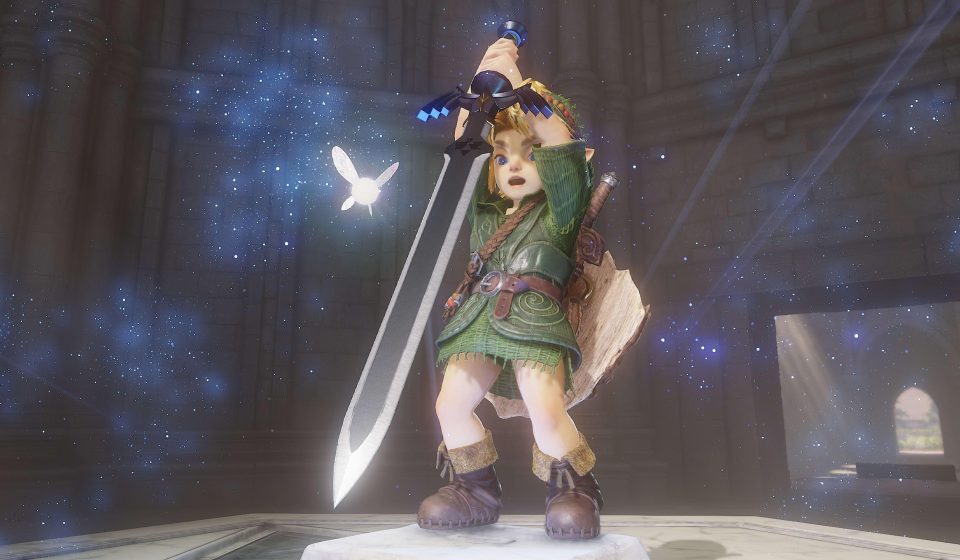
The most immediately visible change is the game’s graphical presentation.
The original Nintendo 64 release used simplified geometry and textures that were remarkable for their time but are clearly products of late-1990s technology.
The Switch 2 remake rebuilds the environments, characters, and cinematic presentation.
For new players, this helps communicate the atmosphere of Hyrule without requiring familiarity with the original hardware.
For returning fans, the question is whether familiar locations still feel like the places they remember.
The remake’s art direction is therefore an important part of its reception, separate from technical measures such as resolution or frame rate.
Does the Remake Improve Combat?
Combat in the original Ocarina of Time helped establish a framework for targeting and fighting enemies in three-dimensional environments.
The remake retains the adventure’s recognizable combat structure while introducing improved movement and control options.
Nintendo confirms that players can jump and dash, and that aiming with certain ranged weapons supports modern control options.
These changes can make navigation and encounters feel more responsive.
However, combat quality also depends on enemy design, animation, encounter pacing, and player expectations.
A review that evaluates those elements is more useful than one that focuses only on the number of added controls.
Camera Improvements
Camera control is one of the areas where older 3D games can feel unfamiliar to contemporary players.
Original hardware limitations influenced how developers managed visibility and movement.
Nintendo has reworked the remake’s camera system to better match modern expectations.
That matters during exploration, platforming, and combat, where the ability to understand the surrounding environment can affect how comfortably players navigate.
Improved camera behavior can also reduce the need to repeatedly adjust position just to see an important object or pathway.
Music and Sound Design
Music is fundamental to Ocarina of Time’s identity.
Melodies are connected to the story and gameplay rather than existing only as background entertainment.
The remake introduces orchestral arrangements, providing a new interpretation of the soundtrack.
For longtime fans, hearing familiar themes with expanded instrumentation can be one of the most memorable aspects of returning to Hyrule.
For new players, the musical system helps distinguish Ocarina of Time from other action-adventure games.
Nintendo has also introduced microphone-based musical input, giving players another way to interact with the in-game ocarina.
Voice Acting and Expanded Storytelling
The remake includes voiced cutscenes and expanded character dialogue.
These additions can make conversations feel more cinematic and help communicate emotional moments.
However, adding voices to familiar characters is a creative decision that may produce different reactions among fans.
Players who developed their own impressions of characters while reading the original dialogue may experience the new performances differently from newcomers.
Neither reaction is inherently negative; they reflect different relationships with the source material.
Are the Dungeons Still Worth Playing?
Traditional Zelda dungeons are built around exploration, puzzles, item acquisition, and encounters that test the player’s understanding of newly learned mechanics.
Ocarina of Time is particularly associated with this style of design.
The remake retains the core dungeon-based adventure, allowing players to experience the original progression with updated presentation and controls.
Players who enjoy methodical puzzle solving and discovering how tools interact with the environment are likely to find this structure appealing.
Those who primarily prefer open-ended exploration may find the traditional progression more directed than newer Zelda games.
Does the Remake Add New Dungeons?
GamingBible’s review indicates that the remake largely preserves the original game’s dungeon and location structure rather than introducing a substantial collection of entirely new areas.
This is worth considering if you are purchasing primarily in the hope of major new story content.
The remake’s main value lies in reinterpreting and modernizing an existing adventure, not replacing it with a completely different game.
Additional activities and features provide variety, but they should not be confused with a full sequel.
What About the Hall of Fallen Foes?
Nintendo confirms that the remake introduces the Hall of Fallen Foes, where players can revisit encounters with previously defeated enemies.
This creates an additional activity for players who enjoy combat challenges and want more opportunities to engage with familiar opponents.
It also adds a reason to revisit certain encounters beyond the normal story progression.
For completion-focused players, features like this can provide value after particular milestones have been reached.
Is the Remake Beginner-Friendly?
Nintendo explicitly describes the game as an accessible starting point for people who have never played Zelda.
Its central story is understandable without completing earlier entries.
Modern controls and updated presentation may make it easier for newcomers to engage with the adventure.
However, players should still expect traditional dungeon puzzles, exploration, and occasional moments that require observation and experimentation.
The remake is not designed as an automatic, linear experience. Solving problems remains an important part of the gameplay.
How Does It Compare With Modern Zelda Games?
Players familiar with Breath of the Wild or Tears of the Kingdom should expect a different structure.
Those games emphasize large-scale exploration and flexible problem-solving, while Ocarina of Time follows a more directed adventure with a strong sequence of story events and dungeons.
Neither approach is automatically superior.
They offer different experiences, and understanding the distinction helps set realistic expectations.
Should Returning Players Buy It?
Returning players should consider how much they value updated presentation, modern controls, orchestral music, and additional features.
If the original remains a favorite, the remake provides an opportunity to revisit it through a new interpretation.
However, players who prefer the exact atmosphere and mechanics of the Nintendo 64 version may still want to preserve access to the original.
Both experiences can have value for different reasons.
Should New Players Buy It?
For someone interested in the history of Zelda or traditional action-adventure design, the remake is a compelling entry point.
It introduces important characters, settings, and mechanics associated with the franchise.
The modernized presentation also reduces some of the barriers that might discourage newcomers from trying the original version.
Before purchasing, confirm that you own a Nintendo Switch 2 and are comfortable with the game’s puzzle-focused structure.
Where to Find Reliable Reviews
Start with reviews that clearly disclose whether the publication played the game and explain the conditions of testing.
Look for discussion of controls, technical performance, story presentation, puzzles, and how the remake differs from the original.
A numerical score without meaningful context is less useful than a detailed explanation of strengths and limitations.
For official specifications, visit Nintendo’s product page.
For a detailed comparison with the original game, read our remake versus original guide.
Frequently Asked Questions
Is the Ocarina of Time remake getting good reviews?
Early published coverage includes positive assessments, including a 10/10 review from GamingBible. Readers should check current review aggregators for additional scores.
What is the Ocarina of Time remake Metacritic score?
Aggregate scores change as new reviews are added. Check the current Metacritic listing rather than relying on a potentially outdated number.
Is the remake better than the Nintendo 64 original?
That depends on whether you prioritize modern presentation and controls or the original game’s historical design and atmosphere.
Does the remake have new graphics?
Yes. Nintendo rebuilt the visuals for Nintendo Switch 2.
Does it include voice acting?
Yes. The remake includes voiced cutscenes and expanded dialogue.
Are there new dungeons?
Published review coverage indicates that the core dungeon structure remains largely faithful to the original.
Can newcomers enjoy the remake?
Yes. Nintendo positions it as a suitable starting point for new Zelda players.
Final Thoughts
The early critical response suggests that Nintendo has succeeded in giving Ocarina of Time a contemporary presentation while preserving the adventure that made it influential.
For shoppers, the most useful question is not simply whether the game received a high score. It is whether its style of exploration, puzzles, storytelling, and combat matches what you enjoy.
Use detailed reviews, official information, and comparisons with the original to make that decision.
Find more gaming coverage on the AztekComputers Blog.